
Category: Case Studies

  • Precision Large-Format Heat Sink for Telecommunications

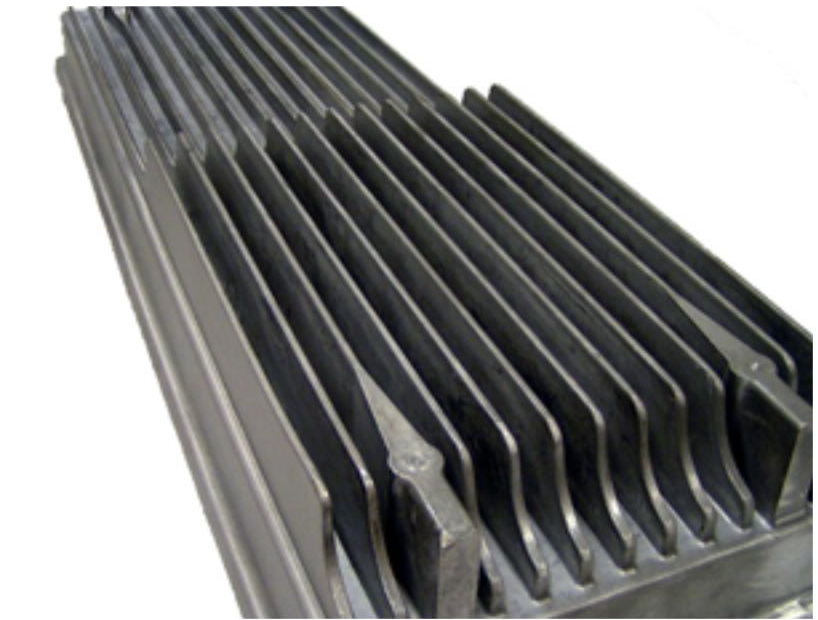
    Precision Large-Format Heat Sink for Telecommunications

    A telecommunications equipment manufacturer needed a large-format aluminum heat sink with exceptional dimensional stability for their high-performance networking equipment. The component required precise tolerances across its entire surface to ensure optimal thermal management in critical telecommunications infrastructure.

    The Challenge

    • Large casting requirements: The heat sink’s size pushed the boundaries of standard die casting capabilities
    • Dimensional precision: Telecommunications applications demanded tight tolerances across the entire component
    • Thermal performance: The heat sink design required consistent fin geometry and surface quality for optimal heat dissipation
    • No existing solution: This was a completely custom application requiring a ground-up manufacturing approach

    The customer needed a casting partner capable of producing large, dimensionally stable components that could meet the exact standards of telecommunications equipment. Solution: Glocon invested in advanced manufacturing capabilities specifically to meet this challenging requirement, implementing high-tonnage pressure die casting with precision process controls.

    Our Approach

    • Equipment Investment: Installed higher tonnage pressure die casting machines capable of handling large-format components
    • Precision Process Controls: Implemented advanced process monitoring and control systems to maintain dimensional consistency
    • Optimized Tooling Design: Engineered specialized tooling to ensure uniform material flow and consistent fin formation
    • Quality Assurance: Established rigorous dimensional inspection protocols to verify tolerance compliance

    Results

    The high-tonnage pressure die casting approach delivered exceptional results for this demanding application:

    • Achieved dimensional stability: Met all tolerance requirements across the large-format heat sink
    • Consistent thermal performance: Uniform fin geometry and surface quality ensured optimal heat dissipation
    • Scalable production: Established repeatable process capable of meeting ongoing production volumes
    • Enhanced manufacturing capabilities: Expanded Glocon’s capacity to serve large-format, precision casting applications

    Why This Matters

    This project demonstrates Glocon’s commitment to investing in advanced capabilities to meet unique customer requirements. By implementing high-tonnage equipment and precision process controls, we successfully delivered a large-format casting solution that met the exacting standards of the telecommunications industry.
  • High-Performance Dust Filtration System for Heavy Equipment

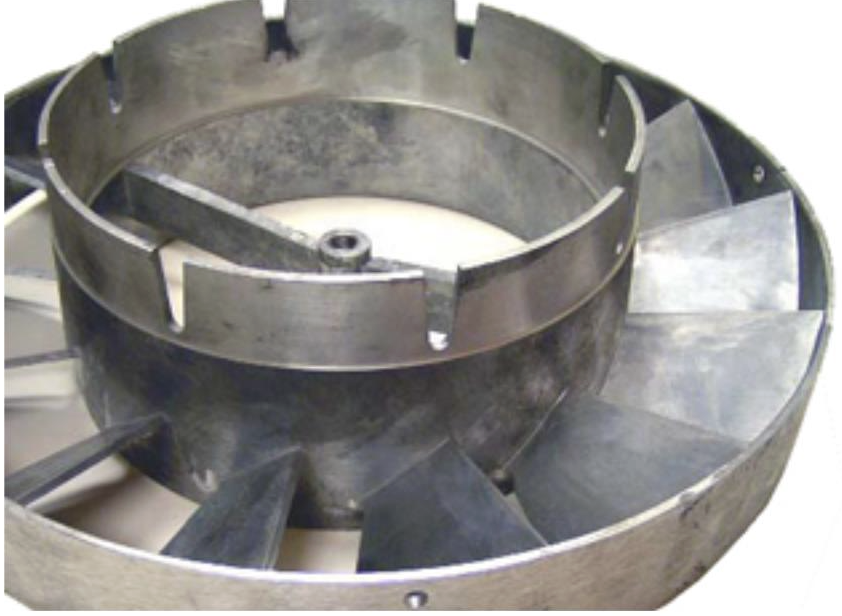
    High-Performance Dust Filtration System for Heavy Equipment

    A manufacturer of dust filtration systems for heavy agriculture and construction vehicles was experiencing significant product failures with a sand cast component. The harsh operating conditions of farm and construction equipment demanded exceptional durability from dust filtration components.

    The Problem

    • Frequent breakage: Sand cast aluminum static fans were failing during transport and under operational stress
    • Inconsistent quality: Porosity and non-uniform material density in sand castings created weak points
    • Performance issues: Rough surface finishes from sand casting were impacting airflow efficiency in dusty environments
    • Customer complaints: Field failures were damaging the manufacturer’s reputation with equipment OEMs

    The customer needed a static fan that could withstand the demanding environment of heavy equipment while maintaining optimal dust filtration performance.

    Solution

    Glocon completely reimagined the part design and manufacturing approach, transitioning from sand casting to precision pressure die casting.

    Our Approach

    • Design for Manufacturing: Redesigned the static fan geometry to optimize it specifically for pressure die casting
    • Process Upgrade: Implemented high-pressure die casting to eliminate porosity and achieve uniform material density
    • Surface Optimization: Leveraged die casting’s superior surface finish capabilities to enhance airflow performance in dusty conditions
    • Quality Enhancement: Established consistent, repeatable production with minimal variation

    Results

    The pressure die cast static fan delivered dramatic improvements across all performance metrics:

    • Eliminated breakage issues: Zero failures reported during shipment and significantly reduced field failures
    • Superior material integrity: Uniform density throughout the casting eliminated weak points and porosity-related failures
    • Enhanced dust filtration efficiency: Smooth die cast surface finish improved static fan airflow performance in challenging dusty environments
    • Consistent quality: Repeatable process delivered uniform parts with predictable performance characteristics

    Why This Matters

    This project showcases Glocon’s ability to solve quality and durability challenges through strategic process selection and design optimization. By transitioning from sand casting to pressure die casting and redesigning the part accordingly, we transformed a problematic component into a reliable, high-performance solution that exceeded customer expectations.

  • Composite Aluminum Fan Hub for Industrial Airflow

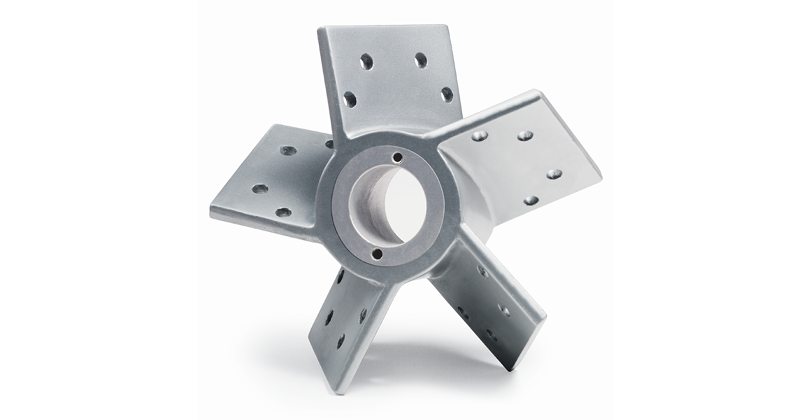
    Composite Aluminum Fan Hub for Industrial Airflow

    A leading industrial fan manufacturer was experiencing critical field failures with their aluminum fan hubs used in high-torque applications across agriculture, chemical processing, and power generation facilities. The existing aluminum hubs were lightweight but prone to breakage under the demanding operational stresses of industrial air movement systems.

    The Dilemma

    • Pure aluminum hubs: Lightweight but structurally insufficient, leading to frequent failures and costly downtime
    • Steel or cast-iron alternatives: Structurally sound but too heavy, requiring significantly more motor torque and increasing energy consumption

    The customer needed a solution that could deliver both structural integrity and weight optimization for their demanding industrial applications.

    Solution

    Glocon developed an innovative composite material approach, fusing aluminum with steel through gravity die casting to create a revolutionary fan hub design.

    Our Approach

    • Advanced Material Engineering: Created a proprietary aluminum-steel composite that combines the best properties of both materials
    • Gravity Die Casting Process: Utilized precision gravity die casting to ensure uniform material distribution and optimal structural properties
    • Design Optimization: Engineered the hub geometry to maximize strength-toweight ratio in critical stress areas

    Results

    The composite aluminum-steel hub delivered breakthrough performance improvements:

    • Eliminated field failures: Zero breakages reported since implementation, significantly reducing maintenance and replacement costs
    • Optimal strength-to-weight ratio: Maintained aluminum’s lightweight advantages while achieving steel-like structural integrity
    • Reduced operational costs: Lower motor torque requirements and energy consumption compared to heavy steel alternatives
    • Enhanced reliability: Improved performance across demanding applications in agriculture, chemical processing, and power generation

    Why This Matters

    This project demonstrates Glocon’s ability to solve complex engineering challenges through innovative material solutions and precision casting processes. By developing a custom composite material, we helped our customer overcome the traditional trade-off between strength and weight, delivering a solution that outperforms conventional approaches.